When What's Old is Renewed
A couple thoughts on bringing old games to new hardware…
In 2006, the Jak and Daxter series got its fifth installment: Daxter. It was the first game in the franchise to be developed by someone other than Naughty Dog (though Ready at Dawn’s founders did include Naughty Dog alumni). It was the series’ first midquel, taking place during the time skip at the beginning of Jak II. It was the series’ first game to be on the PSP instead of the PS2, and it was the first game to star Daxter as the main playable character instead of Jak.
Those last two factors go together. In 2006, handheld games were smaller and lesser than console ones. The limits of technology meant that to gain portability, you had to give up scope and scale and graphical fidelity and even some controls (handhelds always had fewer buttons, and it wasn’t until the Vita in 2011 that a handheld came out with dual analog sticks). The PSP was in some ways perceived as the PS2’s more-compact and less-powerful sidekick, so going from PS2 to PSP was like going from Jak to Daxter, and it made sense to embrace that in the game’s design and premise.
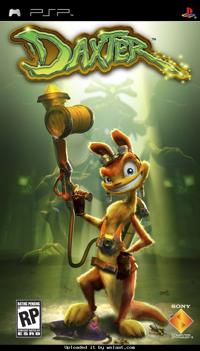
But Daxter outperformed those expectations. I remember seeing multiple reviews saying it wasn’t just good for a handheld game, it was a good game period, and it was proof that handhelds were now capable of delivering console-level experiences. This was a huge deal at the time, and not only was Daxter widely considered one of the PSP’s best games and a system seller (certainly it’s the reason I bought one), it was seen as a worthy entry in the beloved Jak and Daxter franchise.
Time and console generations marched on, and while Jak and Daxter’s PS2-based installments were ported to the PS3, Vita, and PS4/PS5, Daxter was left behind. This didn’t change until 2024, when it (along with the other much less-well-regarded PSP installment The Lost Frontier) got ported to PS4/PS5, making it possible for the first time to play the entire series on the same system.
Obviously I love this from a games preservation perspective, but there’s a kind of bittersweet note to it. If you play through the series for the first time this way, all on the same system, without a nostalgic framing, in an era when there is no longer any real distinction between handheld and console games, Daxter hits in a very different way. It’s no longer a shockingly-strong handheld game that manages to reach up to the lower range of console-level quality; it’s a weak console game that just sits down in that lower range.
It’s hard not to be sad about it. Daxter has aged poorly through no fault of its own and will never again be as enjoyable as when it first came out. It was a revelation that changed what we could expect from handheld games, but the glorious future it pointed to has left it behind and now it’s a footnote in the Jak and Daxter series.
But of course this is because we now live in that glorious future. The tech has grown and the industry has advanced and “good for a handheld game” no longer even makes sense. So it’s hard to be too upset.
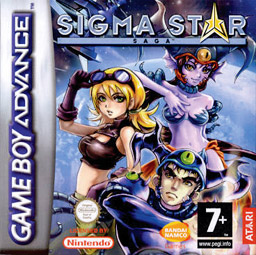
In 2005, Sigma Star Saga was released for the GBA. It was a hybrid RPG and space shooter that I found intriguing and certainly eyed a few times at my local GameStop, but middling reviews and my limited budget meant I never actually tried it out, and as the industry and I both moved on from the GBA it was left behind.
There are a lot of games like this, that were on my radar for a long time but that I never actually experienced. Games have a shorter shelf life than less-interactive media; not only does hardware age out and make it difficult or expensive to (legally) play old games, design sensibilities evolve and it becomes unappealing to suffer through outdatedly obtuse or punishing experiences (at least for folks like me who lost patience as we got older).
But then, a few days ago, an enhanced port called Sigma Star Saga DX came out for PC, PS5, and Switch with bug fixes and quality-of-life improvements. Suddenly it’s easy (and legal) to play this game on modern hardware, and its most glaring flaws have been polished away. Suddenly this game is relevant again.
There are a lot of good old games that are essentially trapped on defunct hardware and buried under unapproachable design. A lot of art that’s effectively lost to the ages and to new generations. So when those works get a fresh coat of paint (far less expensive than making entirely new games) and can be introduced to a new audience, I get excited. It’s great when it means I can reexperience a modernized take on a game I loved, and it’s great when it means I can finally experience a game I wondered about for years and eventually gave up on.
So I’m eager to cast an economic vote for this by snapping up this game, and I’m eager to finally play it. More than that: I am stoked. I’m going to play it on my Steam Deck in handheld mode, which I hope will help me stay in the right mindset with the right expectations. But no matter what, I’m glad this game is no longer left behind.