Welcome to Pixel Poppers; my website for talking about games. The newest posts are below; you can also check out the about page if you’re new here, search the site, or grab the feed.
A game that has you walking around the physical world to find and catch Pokémon, improve and evolve them, and participate in asynchronous multiplayer battles to take control of Pokémon Gyms in real-world locations. A lot of the depth and draw comes from the real-world social interactions that emerge from multiple players in the same physical area. The dynamics of coordinating community members to defend gyms and the opportunity to meet people via a shared activity are far more interesting than the relatively shallow gameplay. As such, the game may have been at its most appealing in the months after its launch when it was pretty common to run into groups of players.
A third-person arena shooter starring busty schoolgirl ninjas armed with water guns. After four brawlers and a rhythm game, a shooter is a refreshing change of pace - but is clearly outside of the developer’s area of expertise and the experience is not up to the series’ usual level of polish.
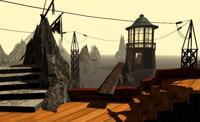
A retrospective on the discourse around Myst as a case study on the weird and inaccurate ways we discuss and recall gaming culture. For me, the main takeaway is that gaming has always had more subcultures than the social narrative has accounted for and when we refer to gaming as a monolith we distort reality by ignoring the experience and perspective of many, many people.
Many games are tests of skill. Players succeed or fail at the game’s goals based on their physical dexterity and reaction time, general knowledge and reasoning ability, understanding and internalization of the game’s own mechanics - anything a game can test. But much of that skill is applied before the moment of success or failure.
Victory in a chess match may come from physically moving your piece into a position that checkmates your opponent, but that isn’t the hard part. And the hard part of beating Doom isn’t the button press that fires the last shot on the final boss - it’s everything you did to enable that shot. These goals, and indeed most interesting goals in games, actually have multiple stages of challenge that funnel into each other.
Here’s my conception of the phases of challenge. This is a fairly abstract framework, since it’s intended to be generalizable to every skill-based game. To help pin it down a bit, let’s take a closer look at each phase and then discuss how they interrelate. Once that’s done, I’ll go into some implications these ideas have for game design.
A rhythm platformer like its twopredecessors. Your character runs automatically, you avoid obstacles and collect gold by jumping, sliding, kicking or blocking at the right time, and your actions affect the music.
This third installment keeps the aesthetic from Runner2 and most of its additions (characters and skins to unlock, levels with branching paths, optional mid-level checkpoints, etc.) and adds several of its own including a double-jump and vehicle sections that control differently from standard running. Unfortunately, some of the new changes greatly damage the game’s core appeal. As a rhythm game with high challenge, strictness, and punishment, it’s important to minimize frustration and maximize flow, but Runner3 takes multiple steps backward in both of these aspects.
An interactive story wrapped in the style and presentation of a SNES RPG. Play as the same technicians from To the Moon, investigating and rewriting the memories of a dying client to grant their life’s wish. The client this time is an old man who was once the boy in A Bird Story, but the content of that game is not a prerequisite to understanding this one. Neither is To the Moon or its free DLC “minisodes”, but they would help contextualize some of the side events.
A mediocre idle game mixed with a mediocre twin-stick shooter to form something that is sometimes but not always more than the sum of its parts. The game takes place in a series of six star systems. The planets house the idle game mechanics - on each one, you can buy and upgrade buildings from a menu to generate passive income. Flying your ship between the planets is where you’ll find the twin-stick shooter gameplay - there are asteroids to mine, enemies to defeat, and a few other randomly-placed interactions like survivors to pick up and checkpoint races to run. Once you have enough money, defeat the boss to unlock the next star system and move forward.
Creative Assembly’s lead social media manager Grace Carroll provides some lessons learned on community management. To me, the key takeaway is that the biggest difference is made just by showing up - making it clear that the community is being heard and that there are consequences for toxic behavior.
A golf RPG with pixel art aesthetic and comedic tone. Progress through eight nine-hole courses with a huge variety of side content along the way. Golf is the main focus, and many optional challenges are contextualized drills on specific golf skills, but there are also one-shot minigames such as racing an RC car and more-developed side modes like mini golf, disc golf, and drone golf. There are also humorous story events and some adventure-game-like puzzles and fetch quests.
Tom Francis takes a look at Slay the Spire, pointing out that because it’s a roguelike and individual games don’t last that long, bonuses and abilities can safely make huge differences rather than tiny incremental ones. The results are a lot easier for players to conceptualize and can make things much more fun. (And as Shamus Young has pointed out there are implications for QA as well.)
A spelling game with a variety of mechanical gimmicks based on the premise that you are guiding a group of survivors down through the floors of a highrise building after an apparent earthquake. Spelling is done on a grid of letter tiles by connecting adjacent tiles to form words. Like in Bookworm and other similar games, tiles that are used are removed and the tiles above drop down. In most levels, you must clear rubble tiles to get the survivor tiles to the bottom of the grid, allowing them to escape the floor and proceed downward to the next. Between levels are short dialog scenes that establish the characters, provide some weak humor, and advance the story in which it’s quickly suggested that all is not as it seems. There are also twelve extra “Chimp Challenge” levels that are disconnected from the story.
A conversational mystery game in which you play a detective robot interviewing other robots to find the truth behind recent robot disappearances. Ride the eponymous subway line and talk to the other passengers who get on and off, learning what they know and sometimes solving small puzzles to get their cooperation or help them out.
A quick look at what the research says about how to avoid overwhelming players with too many options and turning them off of mechanics or entire games. See also Barry Schwartz on the paradox of choice and there’s room for more analysis on option categorization and its relationship to chunking or the way it turns one overwhelming decision into a short series of manageable ones.
A spaceship management sim puzzle game, notable for its optional co-op and for being one of very few Wii U games to actually make good use of the gamepad screen. While the TV is occupied with the ship and its environment, the gamepad is used as the ship’s control panel allowing you to toggle and route power between various systems. You must use this to navigate a series of puzzle rooms by avoiding lethal hazards, activating switches to open doors, and getting to the exit.
A streamlined Pokémon collection and combat game. Take your team of up to three Pokémon on “expeditions” where they automatically walk around, encounter other Pokémon, and automatically fight them in real time. Your only direct control is that you can manually trigger their abilities (which then have cooldowns before they can be used again), but you can’t target them, so you might as well just put them on auto. Successful expeditions result in experience gains and two types of item drops - Power Stones, which are basically equipment for Pokémon that boost stats or improve abilities, and cooking ingredients. Cooking is how you recruit new Pokémon via themed recipes - use a lot of blue ingredients if you want to recruit a blue Pokémon, for example.
As a designer, it’s very easy to fall into the trap of putting together a game that’s fun to design rather than fun to play. This essay dissects this a bit and explains why it’s a problem. It also provides some examples of specific rules of thumb to follow, though these are a bit less clear. The core message is still a valuable lesson.
An action RPG with a branching story and time travel gimmick. As dashing swordsman (well, swordsfox) Reynardo, attempt to lead the Rebellion to victory against the once-benevolent-but-now-mad Emperor. Make four plot-forking choices and fight through waves of imperial raven soldiers to accomplish your objectives - maybe you’re saving an old friend who’s in trouble with the Empire and claims to have a brilliant scheme for winning the war, or maybe you’re working to unearth a legendary superweapon that could instantly turn the tide of battle. The choices create twenty-four different stories, though some are quite similar. Each story ends in failure, but can reveal one of four truths before sending you back in time to the first decision point. Once you have all four truths, new options become available that allow you to use what you know to finally achieve success.
An atmospheric and exploration-heavy puzzle platformer superficially similar to games like ICO, Journey, and ABZÛ. Play as a nameless boy who wakes up on an island with no explanation, explore a handful of varied and beautiful environments, complete platforming challenges and solve puzzles to progress. There’s no dialog and much of the storytelling is vague or ambiguous.
It’s worth reading in its entirety, but here’s my summary: Deciding which games can be sold on Steam is a hard problem that Steam has struggled with for years. There’s a long list of controversial topics and kinds of content - and for each one, many people in Valve’s huge multinational audience feel strongly that it should be allowed on the store and many people feel strongly that it shouldn’t. Many of these topics are also controversial among Valve’s own employees. So rather than continue to struggle with the increasingly impossible goal of consistent curation, Valve is scaling back to block only games that are illegal or “straight up trolling” (later clarified somewhat to mean “designed to do nothing but generate outrage and cause conflict”). Valve’s efforts will instead go toward creating tools to allow people to control what content they see - customers will be able to block specific kinds of games from their own slice of Steam and creators will be able to avoid harassment if they release something controversial.
We’ll have to wait and see the filtering and anti-harassment tools to know whether this plan will succeed, but the reasoning and intent seem solid and likely to lead to a vast improvement over the current unpredictable mess. So I was shocked to see that the reaction from the game journalism community featured widespread rage and contempt.
A Musou game set in a crossover Dragon Quest world, featuring some original characters as well as some fan favorites from previous games. There’s a lot to like here for fans of Musou action and Dragon Quest flavor, though some pacing issues, an overreliance on defense/escort missions, and a complete lack of multiplayer hold the game back.