Home
Welcome to Pixel Poppers; my website for talking about games. The newest posts are below; you can also check out the about page if you’re new here, search the site, or grab the feed.
Black Hole Stunt
So. Like. I’ve never played Fortnite. I’m not really their target market. And if I had any doubt of that, the events of the past few days confirmed it.
Because if I did play Fortnite…
If it was how I blew off steam and connected with my friends…
If I’d spent money on in-game currency and gear…
If I were a streamer who relied on the game to make content, and in turn provided free marketing for it…
I would be pissed that they took the game down for multiple days as a marketing stunt.
And it would not exactly instill me with confidence that this was an ecosystem in which I should invest time, money, or effort, and certainly not one I should rely on being around and available.
Look How Far You’ve Come
One of my favorite game tropes is what I call the “Look How Far You’ve Come” sequence that shows up shortly before the ending.
It can be done a variety of ways, but in some manner it reintroduces areas, characters, enemies, or other story elements that you haven’t seen in a while, emphasizing what’s changed and what hasn’t, reminding you where your journey began and how far it’s taken you. It’s a great way for games to add weight, consequence, and meaning to your adventure and actions while making the ending that much more climactic.
One of my favorite examples actually comes from Dragon Quest Heroes II. (Minor spoiler alert for the rest of this paragraph.) In the lead-in to the final battle, you essentially go through a nostalgia gauntlet - fighting groups of monsters from each area of the game, in the order you explored them. The fights are easy and clearly more of a reminder than a skill test, and over the course of them every single one of your accumulated party members speaks up about your travels together.
It’s more common for this sort of reflection to be presented in cinematics after beating the game. But I find it more impactful when you can actually play through it. Which of course is why EarthBound has the best ending of any video game, ever.
Let's revisit Final Fantasy X! Anyone?

Games remember who we were when we played them. Leigh Alexander revisits Final Fantasy X -- and puzzles over the lost heyday of big Japanese roleplaying games.
The same game can affect players wildly differently depending where they are in their own life when they play it. For all its flaws, and whether or not you think it holds up today, Final Fantasy X matters a lot to people like me who played it and loved it in our late adolescence. In this wonderful, personal, heartbreaking piece, Leigh Alexander explains why.
Halo 2 Changed The Way I Look At Games
Halo 2 is special game to me for many different reasons. It provided hours and hours of immeasurable fun and it pushed me to be more creative by allowing me ...
YouTuber Razbuten discusses how experimentation with custom modes in Halo 2 taught him to see games differently - not just as products to be passively consumed but toyboxes to be actively explored, resulting in limit-testing to find ways to play that can be even more fun than anything the designers came up with.
I wish I’d had this available to reference when I wrote my article about going beyond intended experiences - I absolutely would have quoted and linked to it.
Capsule Review: Sayonara Wild Hearts
Sayonara Wild Brains
I just wrote about how personal variation can result in wildly different experiences of the same game, and now I find I have to force myself to remember this when reading reviews for Sayonara Wild Hearts.
This is a well-received game, with Metascores ranging from 81 on iOS (where the game is part of Apple Arcade) to 82 on Switch and 85 on PS4. I haven’t read every review, but the only substantive complaint in most of the ones I’ve seen is that the game is over too quickly. Whereas I would sum the game up as “beautiful, but only barely playable.”
It has readability problems that make Runner3 look like CliffsNotes. The rules, physics, controls, and camera angles are constantly changing in ways that look great but make it impossible for the player to find a rhythm until they have all the unpredictability memorized. Missing score pickups just costs you points, but hitting obstacles rewinds the song a couple of seconds for you to try again, and if you have to try too many times you can just skip that part of the song - both of which damage the “interactive album” experience.
I feel like if Sayonara Wild Hearts wanted to be a rhythm game, it should have been more readable. And if it wanted to be a playable pop album, it shouldn’t have had failure modes. The compromise we got results in an unfair rhythm game and an album that keeps interrupting itself.
This also feels really obvious to me. Like, when I look at this game, I don’t see how anyone could have come to a different conclusion about it. But while it’s certainly tempting to conclude that all of those reviewers were just wowed by the game’s superficial aspects, I have to admit it’s more likely that my brain is different from theirs, even if I don’t know exactly how.
Capsule Review: Dragon Quest Builders 2
Different Games for Different Brains
I’m starting to think that most of the heated debates that happen around game design choices are due to poorly-understood differences in how our brains are actually wired.
Like, I’ve written before about how some people hate punishment in games and others don’t and how this seems to be related to how we process tension, and how it’s easy to think someone else is a wimp or a masochist for the type of gameplay they like when it actually feels different to them than it does to you. But I realized there are other factors here too - punishment is worse for players who have trouble focusing on things that aren’t novel, which, like… that’s straight-up an ADHD symptom, right? I’ve never been diagnosed with ADHD, but I’ve got a couple of symptoms including that one. Allie has more symptoms, and she’s even more bothered by punishment and repetition in games than I am.
I’ve also talked about how I don’t like games that make you work to find the quality content in exchange for a sense of discovery that rings false for me. But when I saw the following mailbag question in a Shamus Young diecast post, I realized there was something else going on:
Dear Diecast.
The modern Persona games are lauded for their fusion of turn-based combat and social sim gameplay, but I’ve always been bothered by the social sim aspect. It’s less about roleplaying and more about puzzling out the spreadsheet nightmare the designers have conceived so you don’t miss out on story content and have to replay it in new game plus to see it. As such, I always play them with my head in a guide to negate the issue so I can instead focus on enjoying the combat and story.
What’s your thoughts on games that are hard to play properly without using a guide and have you ever found them enjoyable in spite of needing to look things up constantly?
-Victor
My immediate thought was that yeah, I feel the same way about Persona and that this kind of design is stupid in general as just another way to make you work to find the quality content - but I made myself take a step back. It’s not very likely that the designers of several incredibly-popular games are all just making the same obvious mistake over and over and the fans somehow don’t understand the resulting flaws. It’s much more likely that this is another case where players have different but legitimate preferences.
Victor’s question has assumptions baked in - that if you “miss out on story content” you then “have to replay it in new game plus to see it” and that seeing all the story content is the only way to “play properly”. I didn’t notice at first that these were assumptions, because I’m a completionist so to me (and I imagine Victor) they just feel true. Like Victor, I find it hard to enjoy a game if I’m constantly worried that I’ll miss content - particularly story content - particularly if it’s a story I’m enjoying. Like Victor, I often deal with this by using a guide and then lament that the game “requires” a guide.
But like… that seems like something in the area of anxiety or OCD, maybe? I’m not sure exactly what the divide is here, but roughly speaking I suspect some people prefer certainty and control (the completionists) and others prefer exploration and surprise. For the latter group of players, the fact that it’s possible to miss some story content based on your choices is a bonus - it means that you can actually be surprised by what you see, even if you return to play the game again. To me, this is a baffling way of looking at things - but some quick internet research shows plenty of evidence that some people like surprises, some people hate them, and many people in each group do not at all understand the people in the other.
A lot of us have trouble explaining what happens in our own heads, and it’s difficult to realize when something you thought was universal is only true for people with brains like yours. And it’s really hard to see where someone else is coming from if your disagreement stems from one of those things. A lot of the time we’re arguing about things like game design decisions, we’re being much more subjective than we realize, and that leads to heated and unproductive discussions that say more about ourselves than the thing we’re trying to talk about.
Super Mario Maker 2 showed me why I don’t like 2D Mario
In short: its high strictness and punishment plus its regressive difficulty and locking mechanics behind power-ups make it frustrating to learn to play.
I’ve never really gotten into mainline Mario games, but I was intrigued by Super Mario Maker 2’s story mode, which apparently serves as a sort of extended level design tutorial. It features 120 levels each themed around particular level pieces or combinations thereof, showing you how to use them in play and hopefully providing inspiration for how to use them when creating your own levels. I find tutorial design really interesting, and Mario famously teaches through level design, so I checked it out.
Read more...Residual Play Artifacts

Residual play artifacts are objects, whether virtual or existing in real space, that are created by the player during the process of play.
Ian Sundstrom discusses the value of “play artifacts” - things created by players in the process of playing a game that can then be reviewed, saved, or shared. He lists several widely-varied examples from particular games, and observes that it seems to be a growing trend - and since then we’ve seen a proliferation of high-profile games with photo modes and consoles with screenshot or sharing buttons as well.
What Games Are Like For Someone Who Doesn't Play Games
About a year ago, my wife asked if she could play a game. Instead of simply saying yes, I decided to run an informal experiment where I had her play a sampli...
YouTuber Razbuten watched his non-gamer wife try several popular games and the results were fascinating. There are useful implications for game designers (regarding tutorials, player feedback, and how and when to present information to the player) as well as for anybody trying to help a non-gamer get into games.
It’s easy for those of us who’ve been playing games for a long time to take our game literacy for granted. But many common UX conventions are explained poorly if at all in modern titles, putting up an immediate wall for new players and making it hard to get into games without help.
Capsule Review: Snowboarding The Next Phase
Suited for Friendship
So, I definitely miss the customization options in City of Heroes due to the fun of coming up with and designing hero concepts, but it recently occurred to me that they also served a useful social purpose.
I’ve joined a “Free Company” (read: guild) in Final Fantasy XIV and it seems like a group of good folks but it’s hard to break the ice and get conversations started and get to know people. Some of this is how bizarrely difficult it is to play together, but some of it is also that our names and character themes all feel… generic.
In City of Heroes, everyone who put effort into their character ended up with an expressive and distinctive concept, look, name, and battlecry - and there was a place you could write in a little bio or backstory for your character too, which other players could freely read. It was a great way for individual players to be more memorable and it presented plenty of conversation starters.
I still remember, for example, the player I teamed up with once in a pick-up group named Your Pal Phil, whose battlecry was “I’ll loan you the five bucks!”
I can’t tell you the name of anyone in my Free Company in FFXIV.
Capsule Review: Princess Remedy 2: In A Heap of Trouble
A cute little (less than an hour) shooter with minimalist plot, graphics, and sound. As Princess Remedy, progress through a series of areas presented with the look of an old-school RPG as you climb the ominous Boss Tower gathering power-ups and healing everyone you come across.
Each area has a number of NPCs to heal, which is accomplished via playing a quick single-stick shooter level (you continually shoot the direction you last moved in). Each healing grants you a power-up and there are more power-ups to find in the areas you explore. Once you have enough power-ups you can challenge the area boss (a harder/lengthier shooter level) and proceed to the next area.
Read more...You know all the jokes about how D.A.R.E. warned...
You know all the jokes about how D.A.R.E. warned us about these pushy drug dealers trying to force people to take drugs and being all “First one’s free!” and how no drug dealer would ever actually act that way?
They should have been warning us about F2P game designers.
Apple Arcade and Gateway Games
As excited as I’ve been for Apple Arcade, leading up to launch I noticed that a lot of the most-talked about games were ones I’d rather play on a big screen with a controller. Decently big names like Rayman, Shantae, and Sonic, or indie stuff with plenty of hype like Sayonara Wild Hearts or Assemble With Care. And a lot of emphasis was placed on the idea that these games were new and exclusive (although in many cases the exclusivity only applied to mobile - Sayonara Wild Hearts is also on PS4 and Switch, for example).
It took me a bit to figure out why I was so looking forward to a game subscription service when every game on the service that I’d actually heard of was something I’d rather play on a different platform. But I think I’ve figured it out.
The sort of person who pays attention to Apple Arcade announcements is already a nonrepresentative sample of the population. But even for most people in that slice - when they think of mobile games, I suspect they think of annoying wallet parasites that are maybe good for killing a few minutes in line or whatever. I think most of these folks associate the problems with these games with the mobile platform itself. They see them as just what mobile games are, rather than seeing them as the result of the combination of low-friction micropayments, persistent online connections for metrics gathering, and a race to the bottom enabled by poorly-designed storefronts.
So when they hear about mobile games unshackled (and indeed, actually blocked off) from those particular market pressures and tied instead to a subscription, that’s not enough for them to see the possibilities. For these folks, you also need the legitimacy associated with the names and designs that have earned respect on PC and console - even if those types of games don’t really work well on mobile.
My excitement came from the fact that I’ve seen plenty of evidence that designers know how to make good mobile games if they can just get away from the freemium/gacha bullshit. My optimistic assumption was that beneath the games that were getting all the marketing, the ones that were there to get you to pay attention to Apple Arcade, there would be excellent mobile experiences proving that mobile can be a great gaming platform with its own particular strengths and demonstrating how to make use of them. And once you’re paying for the subscription, you’ll try out those other games because why not, it’s free, and you’ll find something wonderful, and you’ll realize what mobile games can be.
This is how Apple Arcade could be the start of a mobile gaming revolution. This is why it’s more exciting than Google Play Pass, which is arguably a better value in some ways but only bundles games/apps that were already available on Android. That’ll only work on you if you’re already open to those games - it doesn’t open new doors, bring in new players, which a subscription-based platform will need to have to be successful. This is why Apple invested so heavily in flashy exclusives, and it might pay off. I mean, jeez - if it worked on Penny Arcade, it can work on anybody.
ErotiSim: Sex and The Sims

It was the phone calls that made me certain. The Sims was going to cross over, one way or another. I worked in a cramped games magazine office for just shy of
The broad appeal of The Sims has always been fascinating, but it’s always had a lurid undertone as well. This 2007 article by Kieron Gillen unpacks that, examining how The Sims functions as a particularly effective safe space to explore, experiment with, and work through interpersonal issues, especially in the fraught areas of romance and sexuality. (It’s also one of a small handful of classic articles that demonstrated to me that it is interesting and worthwhile to write about games and which inspired me to start Pixel Poppers.)
Making People Understand And Care About Your Game
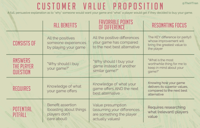
An exploration into the customer value proposition, AKA the full, persuasive explanation as to why someone would want your game and what they’d get if they bought it.
It’s easy to forget how to explain the appeal of your game to outsiders who haven’t been immersed in it the way you have. Victoria Tran of Kitfox Games provides a clear and helpful set of guidelines on what to focus on and what you’ll need to know to frame your value proposition effectively.