Welcome to Pixel Poppers; my website for talking about games. The newest posts are below; you can also check out the about page if you’re new here, search the site, or grab the feed.
A block-manipulation puzzle platformer mixed with a relationship personality quiz. Navigate a series of islands by moving blocks to create platforms and bridges and reach totems, each of which asks you a question about love’s role in your life. The goal seems to be to create an atmosphere conducive to introspection and prompt you to reflect on your thoughts and feelings about love. The game is a couple of hours long and at the end the totems give you a summary of how you answered and what it says about you.
A 3D collectathon platformer. The structure is hub-and-spokes, with an explorable hub area and a series of three zones each containing three levels that can be played in any order, plus one special level at the end. Each of the regular levels has a variety of collectibles to find and tasks to perform, and once you’ve completed enough in each of the three levels you unlock the zone boss fight granting access to the next zone. There are some repeated tasks - every level has a time trial and a couple of tasks involving a few different kinds of collectible. There are also a variety of unique tasks, including standard platforming challenges and such but also a number of one-shot mechanics that keep things fresh but are often a bit unpolished.
The worst part of finally getting around to writing articles that I’ve wanted to write for several years are all the reference links I saved that have since broken - especially the ones that aren’t on the Wayback Machine. I am haunted by ghosts of knowledge.
An open-world game with an emphasis on movement and explosive destruction. Play as Rico Rodriguez (norelation) and liberate the fictional Mediterranean island nation of Medici from oppressive dictator Di Ravello - mostly by blowing things up.
The structure is fairly standard for an open world game. There’s a chain of twenty-odd story missions that need to be done mostly in order, and many more settlements to “liberate” at your own pace. These vary widely in size and include towns, guard posts, and military bases, but liberating them is always a matter of destroying Di Ravello’s military assets and propaganda. Liberating settlements grants access to side challenges that test your skills with specific mechanics, such as vehicle races or racking up destruction with a particular weapon. Several kinds of random encounters can occur as well, tasking you with saving rebels or otherwise helping the cause, sometimes rewarding restock points for consumables. There are many collectibles to find, and liberating all settlements in a given province will mark them on your map. The setting of Medici is also varied and beautiful. I often found myself pausing to admire the scenery and take a screenshot - the game desperately needs a photo mode.
An open-source space sim and a spiritual successor to the Escape Velocity series featuring exploration, trading, and combat. The game is under active development and a lot more content is planned. It’s in a very playable state already, but certain aspects lack polish and it’s a good idea to consult the manual before playing for too long.
A lot of non-parent, non-child gamers seem nonplussed by Nintendo Labo. Super Bunnyhop takes an in-depth look at why Labo is really exciting for the children lucky enough to grow up with it.
There’s something you can do in Undertale that never appealed to me, but this highly-personal essay finally makes sense of it as a powerful example of how games can help us process difficult emotions. (Spoilers for Undertale. Content warning for loss of a loved one.)
Last week, we discussed the spectrum of allowance - a way to describe how allowed a given action is within a game, ranging from impossible to required. A key point is that the game’s designer places each action on the spectrum. Aside from bugs (which violate the designer’s intent) and hacks (which partially override the original design with another), in a game you can only do what the designer lets you. This is true even when you have freedom of choice - that freedom was granted by the designer.
Some games understand this well and play with it effectively - see for example The Stanley Parable, especially the confusion ending (warning: spoilers). But not all games that examine player choice understand the designer’s role.
The Journey Of Me is a free browser game. It’s a 2D platformer and it takes about fifteen minutes to play. I am now going to spoil the hell out of it, but honestly I don’t think you should be too worried about spoilers in this case.
A short Twine game in which you play as a character living with depression and experience a series of vignettes which apparently take place over several months. After reading through a scene you are given a list of options and choose how to respond to the situation. Your choices affect your mental state and your mental state affects your choices - some options are displayed but unselectable if you aren’t in a condition to act on them. There are some similarities to Alter Ego, but with a much smaller scope. Your character and life situation are not customizable and the focus is squarely on depression.
An interactive horror movie starring a group of teens who think it’s a great idea to return to a remote mountain cabin on the anniversary of the night an ill-advised prank led to two of their friends disappearing and presumably dying in the nearby woods. What could go wrong?
The player controls each teen in turn through conversation, exploration, and action sequences. Similar to Quantic Dream games, there are dialog options, choices made by performing actions in the world, and contextual controls meant to resemble the character’s actions - but the controls stick to a handful of defined idioms (the most clever and nerve-wracking of which is holding the controller completely still when the character is trying to hide) which makes the prompts easier to parse but leaves them feeling a bit more like traditional QTEs.
When Grand Theft Auto III came out, it introduced a new interaction to the series: players could now solicit prostitutes and then kill them to get their money back.
“To engage with prostitutes in the game, all the player had to do was pull up to certain scantily clad women, who would enter the vehicle in exchange for a sum of money. . . . Disturbingly, players found they could reclaim their cash by simply killing the prostitute with their car after she’d exited.”
—Samantha Leichtamer, The 5 Most Shocking Grand Theft Auto Moments
This capability persisted in later games in the series and gave rise to a lot of discussion. Much of the commentary was careful to point out that murdering prostitutes isnotrequired at any point. But of course Grand Theft Auto games are exactly that: games. You don’t have to play them at all. And they’re known as games where a lot of the fun comes from messing around in the sandbox, going on murder sprees that are also thoroughly unrequired. So is there a meaningful distinction to be made here?
I think there is. Merely pointing out that you can do something in a game is incomplete. It treats it as a binary, with the action either allowed or disallowed. But game design is much more subtle than that. There’s a wide range of how allowed an action can be.
A level-based auto-runner starring Sonic and friends. Tap to jump, double-jump, and triple-jump/fly/forward-smash depending who you’re playing as. Collect rings, defeat enemies, and avoid obstacles while your character races forward to the end of the level. To pass the level, you must complete at least one of its three goals, which are generally about collecting a certain number of rings or defeating a certain number of enemies, sometimes as a specific character. Some levels loop a few times and some loop infinitely until you achieve a goal; otherwise you either pass or fail when you reach the end. On top of this are some Dr. Eggman boss fights and bonus stages where you can rack up tons of rings.
Nintendo’s first mobile app, Miitomo is more social toy than game. It has a few modes - customizing your Mii, providing answers to various open-ended questions (ranging from “What are you doing this weekend?” to “What’s something you’ve lost that you’ve never been able to find?” and everything beyond and in between) which your friends can view and comment on, creating “Miifotos” by posing Miis, speech balloons, and other items against whatever background image you like, and getting new clothing and accessories for your Mii either via in-app currency or the Pachinko-like “Miitomo Drop” minigame.
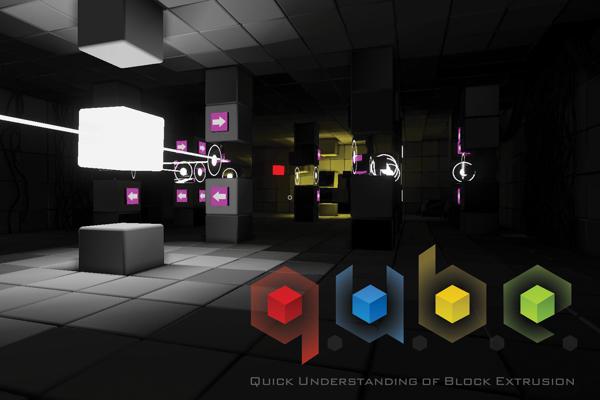
A first-person puzzle game in which you manipulate designated cubes in the environment to create platforms, barriers, springboards, and more in order to solve a series of puzzle rooms in a stark, sterile, and modular-looking environment. More mechanics are introduced over time and the puzzles become more complex and allow for new applications.
A sequel to Balloon Fight that takes the “Balloon Trip” concept and expands it into a full platformer. Play as Alice, a girl who can fly just like a Balloon Fighter with her two balloons. Taking damage will pop first one balloon, leaving you with less lift, and then the second, leaving you unable to fly - but you can still run and jump and if you land on solid ground you can inflate new balloons. You can even manually let go of your balloons at any time, which is sometimes useful to take alternate paths. Navigate eight autoscrolling levels collecting balloons for points, avoiding hazards, and defeating enemies (including boss fights at the end of even-numbered levels) to save your little brother. There is also a two-player mode in which you compete to collect balloons, and Balloon Fight’s Balloon Trip mode is also copied over essentially unaltered.
An action game similar enough to Joust that today it would be called a clone, though there are some changes to the formula and everything is wrapped in a more kid-friendly and arguably more-readable aesthetic. Gameplay still consists of flying fighters in a single-screen arena who battle by bumping into each other with the higher-altitude combatant being the victor, but this time instead of bird-mounted knights the characters are humans held aloft by balloons. Combat doesn’t directly kill the enemy, but pops their balloon. Enemies have only one balloon while player characters have two, which grants players an additional hit point as only one balloon is popped at a time.
The Beginner’s Guide is a short (ninety minutes or so) narrative game by The Stanley Parable creator Davey Wreden. I like it a lot and recommend it to folks interested in how we create and talk about games. If you’re intrigued by the game but haven’t played it yet, you might want to do so before reading further. The game has generated a lot of analysis and discussion - my personal favorite being Ian Danskin’s video essay The Artist is Absent: Davey Wreden and The Beginner’s Guide - but there’s a trend among some critics that I find troubling and want to dig into.
Charlie Cade takes a look at how Naughty Dog’s approach to linearity has changed over the years, examining the tradeoffs made in each of its major franchises. To me, the most interesting point is that nonlinearity enables riskier design, as a frustrating moment is much more likely to cost you a player if the player can’t try doing something else for a while.
An action game in which bird-mounted knights fly around and battle in a single-screen arena. Controls are simple - the only buttons are left, right, and flap - though the physics take some getting used to. Fighting is accomplished just by colliding with another knight, with the victor being the one who’s higher up. Enemy knights drop eggs when defeated which must be collected quickly or they will hatch into new knights. Defeat waves of knights while avoiding the few stage hazards (mostly the lava at the bottom) to rack up points.