Home
Welcome to Pixel Poppers; my website for talking about games. The newest posts are below; you can also check out the about page if you’re new here, search the site, or grab the feed.
Capsule Review: dordle
Capsule Review: Wordle
Capsule Review: The Last Campfire
Capsule Review: Star Trek Prodigy: Supernova
Sam Barlow's guide to making narrative games

At our recent GI Academy Live event, Sam Barlow of Her Story, Telling Lies and Immortality fame laid out his thoughts o…
Sam Barlow (of Her Story fame) discusses his approach to building stories for narrative-based games. I found it refreshing to see discussion of how the medium affects what’s possible and how to get the most out of it, by incorporating challenge, opportunity for expression, a space to explore, and simulation of a richer reality. (I couldn’t help but look for parallels to my own, far-less-qualified, take on the subject.)
Right Now Is A Great Time To Jump Into No Man's Sky
Via Kotaku: Right Now Is A Great Time To Jump Into No Man’s Sky
I’ve been trying to figure out what to say about this for a month.
On the one hand, it’s a gratifying surprise that No Man’s Sky’s 4.0 “Waypoint” update seems like it finally deals with the problems I had with the game, and I went ahead and redownloaded it. But it’s also bittersweet, because Shamus Young had the same problems, so my immediate reaction to the news is to wonder what he’d have to say about this—
And then I remember.
I still don’t know what to say. I wrote before that I no longer had heroes in the talking-about-games-online space. Shamus was the closest thing left. I don’t think there was anyone I looked up to more.
I never met Shamus or even managed to have a direct interaction with him, but it’s hard to overstate his influence on me. I’ve been reading his work for something like fifteen years. There’s a reason he’s the first link in my blogroll and I’ve quoted or linked to him several times. I’m going to feel his absence for a long time, and I’m not the only one.
No Man’s Sky is just one game, and though Shamus wrote about it several times it’s not in the top handful of games that are most associated with him. But I can’t help but find it tragicomic that after he revisited the game multiple times and repeatedly found that its core issues weren’t fixed, they finally are and he didn’t live to see it.
You have to find the humor in these things, because otherwise there’s only the darkness.
Star Trek (2013-2016)
So, I’ve been reading the Star Trek comics set in the world of the reboot movies. They are surprisingly good.
The sixth volume makes references to the events of the then-recent Star Trek game set in the same world, which surprised me—most Trek comics exist in their own isolated continuities, since mainline Trek continuity is dense with decades of lore by this point. But the reboot movies started with a cleaner slate and thus can have a single continuity between comics, movies, and games (well, there was just the one game, but still). So that’s kind of cool.
But it’s also clearly cross-promotional. If you read the comics and they tease you with references to the game’s events, maybe you’ll get curious and go buy the game. It’s a little blatant, but, well, I enjoyed the comics so much that it actually worked on me. I decided to pick up the game, which I’d previously ignored due to its poor reviews.
Here’s the dumb part: you can’t buy this game anymore. Not new, anyway. It came out in April of 2013 on PS3, Xbox 360, and Windows/Steam. In April of 2016 - just three years later - it was delisted from all platforms, presumably due to license expiration.
I don’t know much about licensing deals, but this really feels like a terrible model in which everybody loses. If I could have bought this on Steam, I would have, since I have a Steam Deck and no portable way to play a PS3/360 game. Instead, I bought a used physical PS3 copy and not a cent of that sale went to the developer, publisher, or IP owner. The cross-promoting comics convinced me to give Paramount money that Paramount actually refuses to take.
This is also a clear argument against digital-only distribution. If the game hadn’t been sold physically, it would now be almost impossible for me to play it at all… at least legally.
Thankfully, the game was sold physically, so I was able to grab it off eBay for ten bucks, and now I am excited to go play this terrible game.
Pointless Viewpoint Characters
So, okay, Sega is apparently developing films based on two of its classic titles: rhythm game Space Channel 5 and beat ’em up Comix Zone. Which—okay, cool, whatever; this early it’s impossible to say whether they will be any good. (Though my immediate thought was “Okay, now do Crazy Taxi.”)
But here’s what caught my attention: the Space Channel 5 film will apparently “tell the story of a hapless fast-food worker who is recruited by a freedom reporter from the future to save the world from aliens using the one thing that unites all people on the planet: our love of silly viral dances.” If you aren’t familiar with the source material: the game Space Channel 5 stars a future reporter saving the world from aliens through dance. There’s no “hapless fast-food worker” in the mix. That’s new for the film.
To be clear: I’m not trying to pick on this film in particular. This is a really common pattern. The Sonic the Hedgehog games (and comics, and I think mostly the shows) are about Sonic fighting Eggman, while the films are about James Marsden meeting Sonic and helping him fight Eggman. The Transformers cartoons (and comics, and old movies) are about good and evil transforming robots, while the Michael Bay films are about Shia LaBeouf meeting good transforming robots and helping them fight evil transforming robots. And on and on; you get the idea. As part of an attempt to give an adaptation of a niche property more mainstream appeal, the studio adds in what TVTropes calls a “lead you can relate to”. As if the audience can’t understand a fantastical setting unlike modern Earth or relate to any of its characters unless there’s a wholly non-fantastical person along for the ride to comment on how unlike modern Earth this all is (and probably end up playing a key role in saving the day despite being wholly unqualified compared to the setting’s preexisting characters).
(Note that this is unnecessary for the Comix Zone adaptation since that game was already about a normal artist getting sucked into the world of their comic; the movie can just do the same thing there with no problem.)
Now, I have to assume from the sheer number of times this has been done and the unimaginable amount of money involved that the strategy works more than it fails (or at least seems to). But it perplexes me. Of course it feels bizarrely patronizing—the source material didn’t need to have an everyman audience surrogate in order for the audience to know how to understand and react to the premise and setting. The audience just had their own actual reaction.
But beyond that, naively it seems like this sort of move should reduce the overall appeal of the adaptation.
For the existing fans, the new viewpoint character is an extra layer of metaphor distancing them from what they came for. They’re here to enjoy retro-futurist dancers / brightly-colored forest animals / transforming robot battles, not to watch someone else enjoy them. Any time or focus the film spends on the normal everyday person is worse than useless because it takes away from the time or focus spent on what makes this IP what it is and the reasons the fan enjoys it.
So presumably the idea is that having a “more relatable” lead character will gain you more mainstream appeal than it costs you in niche appeal, but like… having a generic protagonist is not a unique selling point, by definition! All it does is make the movie more interchangeable with other movies, and there are so many movies out there—if you’re someone who needs that “relatable” lead, are you even going to choose to watch Space Channel 5 instead of an actually-mainstream film in the first place? Why would you, unless the fantastical setting appealed to you? In which case, do you even need the “relatable” lead?
It doesn’t make sense to me. It really seems like this kind of adaptation just waters down what sets the source material apart; taking away some of the reason to watch it in particular, replacing it with weaker generic appeal that makes it stand out less.
I can see where that’s a good approach if there aren’t many choices available to the audience and you just need to avoid pushing people away and thus remove reasons not to watch your film. But given the options available to modern film audiences, I’d expect you to be better off giving people a clear reason to watch your film by offering something other films do not.
Like rocking a bicycle
It’s fun to dust off the old Rock Band controllers and pick the game back up.
It’s even more fun to discover that you played so much fake plastic guitar back in the day that you can, even now, jump right back in on Expert.
So I got my Steam Deck
Things I have done to prep my Steam Deck for playing games:
- Combed my library, especially my evergreen favorites and my high-priority backlog, for compatible games and installed them, including gigantic AAA titles my previous gaming computer wasn’t fancy enough to run.
- Leaned on ProtonDB to find even more compatible games than those verified by Valve and installed those too.
- Bought an SD card to triple my Deck’s storage to hold all these games.
- Installed EmuDeck to expand my library even further.
Games I have actually played on my Steam Deck:
- Vampire Survivors, a tiny three-dollar indie pixel-art game.
Regrets:
- None
My Bad Dark Souls Take
(Disclaimer: I don’t play Souls games and I have absolutely no idea what I’m talking about.)
So I have this theory that a big part of why Dark Souls games attract so much “git gud” toxicity is because they actually aren’t that hard.
A common argument for why Souls games don’t need easy modes is because they already have implicit difficulty options and things you can do in-game to make the game harder or easier on yourself. Figuring out which builds are overpowered and how you can increase your self-heal abilities and so forth isn’t as obvious as picking a difficulty option from a menu, but it does integrate better into the game’s world. This fits with these games’ trend of relying on atmosphere and obliqueness rather than direct explanations, drawing the player in to learn through exploration and experimentation (though of course in the internet age you can also just check the wiki), and overall provide an experience of encountering somewhat difficult but ultimately conquerable challenges and learning to overcome them. The games are supposed to be about mastery, so they are intended to be masterable.
And, like, that sounds pretty cool, right? It’s not what I look for but I get why these games are well-liked.
But the combined result of these design decisions is that the games look hard when actually they are inscrutable. And I think that naturally encourages a lot of hostile bullshit signaling/gatekeeping that frames the games as especially difficult and the people who can handle them as just better.
For a game (or any skill) that’s actually exceptionally difficult, you generally don’t see top performers saying “git gud.” They’re much more likely to share useful advice, because that advice isn’t enough. Knowing what to do doesn’t take someone all the way if they still need tons of practice and skill to actually pull it off, and in those cases telling people what to do actually makes the top performer look more skilled. It shows that they aren’t threatened by giving other people the tools to get on their level, and also equips those others to understand just how good the expert is since matching their performance is still quite difficult even knowing exactly how to do it in theory.
On the other hand, if there’s just some slightly esoteric information you need and that’s most of the difference between success and failure, the opposite is true. Giving people that info would make them see how easy it is to get on the “expert” level, thus threatening experts’ superiority. So if you’re trying to protect that superiority, you’ll guard that info like the password to a secret club.
Because the Souls games are hard to read, somewhat difficult, and quite masterable once you know the secrets, they’re in a sweet spot where “secret club” membership is easy enough to attain that the group is pretty large and thus will have a lot of status-seekers in it, but small enough that there are plenty of non-members to exclude and show off to, who will think the game is hard and that being an expert in it is impressive.
I suspect that if the games were more readable, they wouldn’t have a reputation as being super hard, and status-seekers wouldn’t flock to them the way they do and basically nobody would be telling others to git gud. If for some reason you want that kind of community around your game, make it somewhat hard to play but definitely hard to read.
Player Exploitation and Memetic Antibodies
Sometimes I’m glad I grew up when video games weren’t very good yet.
There were certainly good individual games here and there (Tetris is probably the most perfect video game ever made, and that’s from the mid-to-late 1980s depending which versions you count). But the medium itself was niche and unpolished. The technology was weak, the audience was small, and best practices for design and marketing weren’t yet known. Video games were still a cottage industry.
Over time, the tech improved and the industry learned to make better use of it. The audience increased along with the potential revenue, resulting in increased investment by creators to capture bigger slices of a growing pie, and now global annual sales are measured in the hundreds of billions of dollars.
Games are now a lot better. But better at what? Better for whom? The same advances that have enabled vast improvements in the player experience have also enabled vast improvements in player exploitation.
I think it was a tremendous advantage for me that I was playing games during the earlier experiments in these spaces, when exploitation methods were clumsy and transparent compared to their current level of refinement and subtlety.
The first gacha game I ever played was MonTowers, which didn’t do a great job encouraging the player to spend money. After playing for a while, I decided to buy some currency anyway since I’d been having fun with this free game and and it felt fair to support the creator with a few bucks. The purchase had no noticeable effect on my experience of the game, so I pretty quickly concluded the whole thing was dumb and I have spent literally zero dollars on gacha since then even though later gacha games are much better at extracting money from their players.
I was exposed to a weaker version of the attack, which allowed me to develop memetic antibodies and become immunized against the entire strain. I was vaccinated.
I worry about the people a couple decades younger than me, or even the ones of my generation who just waited longer to get into games. People whose first gacha game was Genshin Impact, whose first multiplayer shooter was Fortnite, whose first user-generated content game was Roblox. They’re getting exposed right away to highly-evolved attack methods, incredibly more virulent and pernicious than my early experiences, often with no protection at all.
All Hail No Fail
I’m increasingly coming to the conclusion that I want to completely turn off failure in games.
(To make this explicit right at the beginning: I am talking about my own experiences. Other people have different experiences, desires, priorities, and so on. This is normal and good.)
Consider Rock Band: missing individual notes is technically failure of a sort, but you can keep playing unless you miss too many and fail the song. At that point, you’ve triggered a binary failure mode which is recognized and punished: to keep going, you now have to restart the song completely. However, you can avoid this by turning on “No Fail” mode. With that mode active, you can still miss individual notes but you can’t fail a song and will never get kicked out of one.
That’s the kind of “turn off failure” I’m talking about: not a “win” button, but opting out of punished binary failure modes.
I’ve said before that every game should have a No Fail mode, and now I’m at the point where think I would turn it on in just about every game if I could.
Here’s why.
Read more...Toonstruck, Telltale, and Ken Williams
Recently I was chatting with friends about this article: Toonstruck (or, A Case Study in the Death of Adventure Games)
It’s an interesting retrospective, especially for people like my friends and me who grew up on Sierra and LucasArts adventure games but lacked the perspective to understand the genre’s decline in the mid-to-late 90’s. It pins at least part of the downfall on an adherence to a vision of games as interactive cinema, as championed by Sierra’s Ken Williams. Toonstruck in particular was an overoptimistic overinvestment in this vision that went way past deadline and over budget (though this write-up also makes it sound pretty fun and makes me want to finally get it off my backlog and play it).
In our conversation, my friend asked me, “With some distance, what do you think about Telltale’s attempt at a revival?” I turned out to have a lot to say about this.
Read more...Valve’s Steam Deck makes a brilliant case against walled gardens

Rather than boxing you into its own store, Valve's portable gaming system lets you install software from anywhere, and it’s glorious.
We can argue all we want about the relative merits of closed versus open systems and so on, but it’s rare that this actually persuades any decision-makers. What they pay attention to is what’s been shown to make money. So it’s exciting that Valve is out here betting pretty big on releasing the Steam Deck as an open system and that they seem to be having success with it so far. If that success continues, then maybe the Nintendo/Sony/Microsoft/Apples of the world will start to take notice.
It’s also an interesting lesson on productization and marketing. All these unusual capabilities of the Steam Deck are really nothing new and have been available on general computers for quite a while. But by presenting the Steam Deck as primarily a Switch-like hybrid games handheld/console with buttons and analog sticks, giving it an approachable works-out-of-the-box setup and configuration, and pricing it affordably, it targets a new audience and is suddenly seen as a direct competitor in what had previously seemed like a different market.
The Quest for Dragon Quest
Every once in a while, I like to pretend I’m going to catch up on Dragon Quest.
I played a lot of DQ 3 on the NES when I was a kid, but never really got into the other mainline games. Builders 1+2 made me wish I had a better grasp of their stories/worlds, and Heroes II made me want to better know their characters (especially from DQ 4).
These are widely-beloved culturally-significant games, and as such they’ve received a number of ports over the years. But when I look at the options for playing these games today, I’m flummoxed. I know I should no longer be surprised by basically any decision made by Square Enix, but their treatment of their notable back catalog really comes across like they hate money.
The first six mainline DQ titles all have relatively definitive ports… on mobile. (One can quibble over the graphics, but my understanding is that it’s not nearly as bad as the ports of classic Final Fantasy or Chrono Trigger, and unlike with those games, the DQ ports are otherwise generally considered the best versions of the games due to fixes and quality-of-life improvements.) None of these are available on PC. The only mainline DQ game on Steam is DQ XI. And for consoles - the first three of the ports were also ported to Nintendo Switch… but only those three.
I don’t understand this. Is the paying audience for classic JRPGs really bigger on mobile than PC or console? I find that hard to believe (especially because, like with all Square Enix games, they are quite highly priced for the mobile stores.) I know I don’t want to play a classic JRPG on a touchscreen, and I expect people who want to play old games to care more about preservation and prefer platforms that aren’t actively hostile to it.
And as the developer/publisher, once you’ve paid the overhead cost of getting the engine and translation in place and released the older, less-well-regarded games (3 is well-liked, but 1 and 2 are generally not as recommended as 4, 5, and 6), why not release the later games too?
Dragon Quest isn’t even the only series that Square Enix has treated this way. The first Star Ocean has a nice port on Switch and PS4… that is not available on PC. (At least this one isn’t mobile-only, I guess.) And the second Star Ocean, which uses the same engine and is already translated, has not received such a port and isn’t on any modern platform (at least in the US). Steam only has the fourth mainline Star Ocean game at this time (though thankfully the upcoming sixth game is supposed to come to it too).
I was so sure once the DQ 1-3 ports and SO 1 port came to Switch, they’d be followed by the next games and also make it to Steam, but it’s been quite a while now without so much as a whisper of that. Instead we’re getting… a new remake of DQ 3. What?
I don’t know what to do with all of this. I guess if I want to play DQ 1-3 my best bet is Switch. But 4 and 5 are the ones I’m most curious about and I don’t seem to have great (legal) options there, despite it really seeming like it wouldn’t be hard for Square Enix to provide them.
How to handle land value tax in online games and virtual worlds
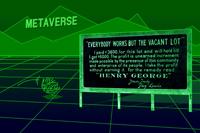
Lars Doucet and Daniel Cook share a high-level guide for game designers and game economists working in large multiplayer online games and/or virtual worlds.
In one of the frustrating ways art imitates life, games with systems resembling real estate tend to create situations resembling housing crises. In this write-up, Lars Doucet and Dan Cook discuss why this happens (hint: it’s the same reasons it happens in real life) and how to fix it in your game design (hint: it’s the same way we could fix it real life).
Kirby and the Curved Difficulty
I’ve been thinking lately about difficulty curves.
Not all games are about creating flow. Games are about creating all kinds of experiences. But for the ones that are about flow, a gradually-increasing difficulty curve is a natural approach. As the player gains more practice and experience with the game’s mechanics, they will find its challenges to be easier. The game must therefore become objectively harder in order to provide the same subjective level of difficulty and keep the player engaged.
This is well-known and sounds simple, but is actually quite complicated and full of traps—some of which are also well-known. The same level of challenge will vary in difficulty to different players, which can be mitigated with easy modes and the ability to skip challenges. Players may put a game down unfinished for any number of reasons and then come back with their skills rusty and find the game isn’t reapproachable due to the elevated difficulty of mid- or late-game challenges, which can be mitigated via always-accessible tutorial/training/practice modes or level selects.
(Note that things get even thornier when you talk about difficulty across installments in a series or genre, given that you want to challenge veterans but still be approachable for newbies. But that’s not what I want to talk about today.)
One of the more insidious traps comes from the fact that there are a lot of elements of difficulty, and thus a lot of ways to make a game harder—and different players will react differently to these different ways, even if the overall level of difficulty increase appears similar.
Read more...Paying for games twice
Like many people my age, I grew up with more time than money and access to relatively few video games, and found the situation reversed when I became a working adult. My scarcity-mindset habits combined with the glut of sales, bundles, and downright free games has resulted in my having a substantial backlog—even after canceling my PlayStation Plus subscription, I own something like six hundred games (depending exactly how you count them) that I have never played. (And over a hundred of those are ones I’ve flagged as ones I really should get around to at some point.)
I stemmed the tide somewhat by telling myself that I’m only allowed to buy a game if I’m confident I’ll play it that week - and then tightened the restriction to that day. But it was hard to hold myself to this. Great games kept going on serious sales! And though I tried not to, I still kept buying games that realistically I was probably never going to play.
But recently I was introduced to an idea that has finally put a stop to this behavior. I’ve now gotten through multiple sales without opening my wallet once, when I know I would previously have caved and bought something. The idea that did it for me was from this article: Everything Must Be Paid for Twice.
The article points out that in most cases, when you buy something you don’t get value out of it right away. You’ve paid the first cost—the monetary one—but the second cost is the effort and time to actually use the thing. Buying a book doesn’t add value until you read it. Buying workout equipment doesn’t add value until you exercise with it. Even buying a decoration doesn’t add value until you hang it up or otherwise display it. Until you pay the second cost, the first cost is sunk - not much better than throwing the money away.
I knew this, but what the article points out next is the piece I was missing: the second cost is usually much higher than the first.
If you’re in a position to buy things you don’t use, it’s probably because your time is, in some sense, worth way more than the amounts of money you’re throwing around. This is especially true if the amount of money you’re throwing around is, say, just a few bucks to get a discounted game that would require eighty hours to play!
Keeping that relationship in mind has gotten me to the point where I can finally ignore game sales. Before, I always used to think, “Oh, but what if I want to play this game later, when it’s back to full price?” Now I recognize that the difference between paying half price for a game and paying full price for it is significantly less than the cost of allocating the time to play that game. It’s a trivial part of the calculation and it should be treated as such. The “savings” from buying a game on sale that I wasn’t otherwise already about to buy aren’t worth it.
Obviously the threshold will be in different places for different people, but for me (especially now that I’m gaming much less than I used to), it’s clearly correct to just delete all those notifications about my wishlisted games going on sale. I’m a little embarrassed how much of a relief it is to just… not worry about that anymore.