Welcome to Pixel Poppers; my website for talking about games. The newest posts are below; you can also check out the about page if you’re new here, search the site, or grab the feed.
I quit World of Warcraft in June of 2009. I quit hard. I donated my assets to the guild bank and deleted all of my characters. I didn’t want to leave the door open to come back. I wanted to burn it down and salt the earth.
I don’t have much more to say about Uncharted 2, as it turns out, because I didn’t get through much more of it before giving up and sending it back to GameFly. I’m therefore not qualified to review it, but I’ll tell you that the reason I sent it back was because I disliked (a) the combat (b) the parkour (c) the artifact-hunting, which leaves very very little to enjoy. All that remains is the game’s cinematic components, the dialog and characterization and set-pieces. And there’s the other problem: Uncharted 2 is, even more than its predecessor, far too movie-like.
I’ve been thinking a lot lately about franchises. Having recently played Mass Effect 2, and then Assassin’s Creed II, and now Uncharted 2, I have a lot of questions about what sequels are and what they should be.
When I played the original Mass Effect, I fell head-over-heels in love. I made three complete play-throughs in rapid succession, I devoured both novels available at the time (Revelation and Ascension), and when called upon to name my favorite three video games, Mass Effect made the cut.
Then I played Mass Effect 2, and now I barely care about the series. I mean, I’ll probably play Mass Effect 3. I guess. Certainly not for full launch-day price. You can bet I won’t pre-order, even if they don’t pull any of my pet peeve shenanigans.
What happened here that turned my devoted fandom to near indifference?
The way things are right now, I still don’t have time to write the in-depth, fleshed-out articles I used to write. But I still have a lot of thoughts about video games, and most of them don’t really fit into 140 characters. So from time to time, I’m going to revisit this space with what’s on my mind.
Today I am thinking about superhero games. These, like film tie-ins, are so rarely done well that it’s actually noteworthy when they don’t suck.
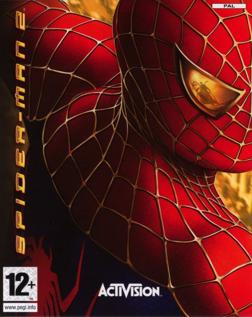
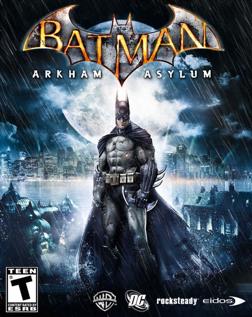
Part of the problem might be that superhero games tend to confine themselves to the “third-person action game” format. Sometimes that works - GTA-like mechanics fit Spider-Man surprisingly well, and taking several pages from the book of Bioshock (switched, of course, to third-person) paid off well for Batman.
Still, this scheme puts severe limits on the types of gameplay available, and not every superhero fits well into those limits. If we branch out into other genres, however, things really open up, and there are plenty of superheroes just waiting to star in a good game. Here’s the ones I have in mind, and the games from which they should take their cues.
Let’s make a graph. The horizontal axis is player skill. On the far left is no skill - just random button-pushing. On the far right is perfect video game godhood, always doing exactly the correct thing at the correct time in the correct way. The first time you play a game, you’ll probably be somewhere in the middle - farther right if you’re a veteran gamer, farther left if you’re a novice. As you play the game, and learn its mechanics, you’ll trend right as you get better.
The vertical axis is performance level. At the very bottom is complete failure - game over as quickly as possible, not achieving any of the game’s goals. Farther up is the passing line, separating failure below from success above. The line itself is a performance level of just barely passing a challenge - surviving the boss fight with one hit point left, clearing the race course just before the clock runs out, and so on. And at the very top of the axis is absolute perfect performance - winning by the largest margin possible.
Now we can chart the performance levels achievable with a particular amount of player skill: the “skill curve” for a given challenge.
Once upon a time, people didn’t buy video games. They went to an arcade, and bought playtime in twenty-five cent increments. How much time a quarter bought was completely dependent on the skill of the player. An unskilled player would find their progress barred quickly, and need to supply more quarters. A skilled player could proceed much longer, and was thus rewarded for the time, effort, and money poured into gaining their skill. The public nature of the arcade also rewarded the skilled player with the opportunity to show off in front of others. This provided the unskilled players with something to aspire to and suggested that it would be worthwhile to keep feeding the machines with quarters, so that they too might someday bask in similar glory. So it made a great deal of financial sense for arcade games to feature limited lives with more available for purchase.
Eventually video games moved from the arcade to the living room. Here it was much harder for a player to compare themselves to other local players, and there was no need to keep the quarters flowing since games were purchased outright. The reasons to limit lives had vanished, and barring the progress of unskilled players now served mainly to disrupt the experience and prevent those players from seeing all the content of the game for which they had already paid. This limited the games’ potential audience - why buy a game you can’t expect to make it through? Financially, it made no sense whatsoever for games played in the home to feature limited lives.
But that didn’t stop them from doing it anyway. From the original Super Mario Brothers on the NES all the way up to New Super Mario Brothers on the Wii, mainstream games have still not completely shaken off the limited lives trend. Why?
WARNING: THIS ESSAY CONTAINS FULL SPOILERS FOR PRINCE OF PERSIA.
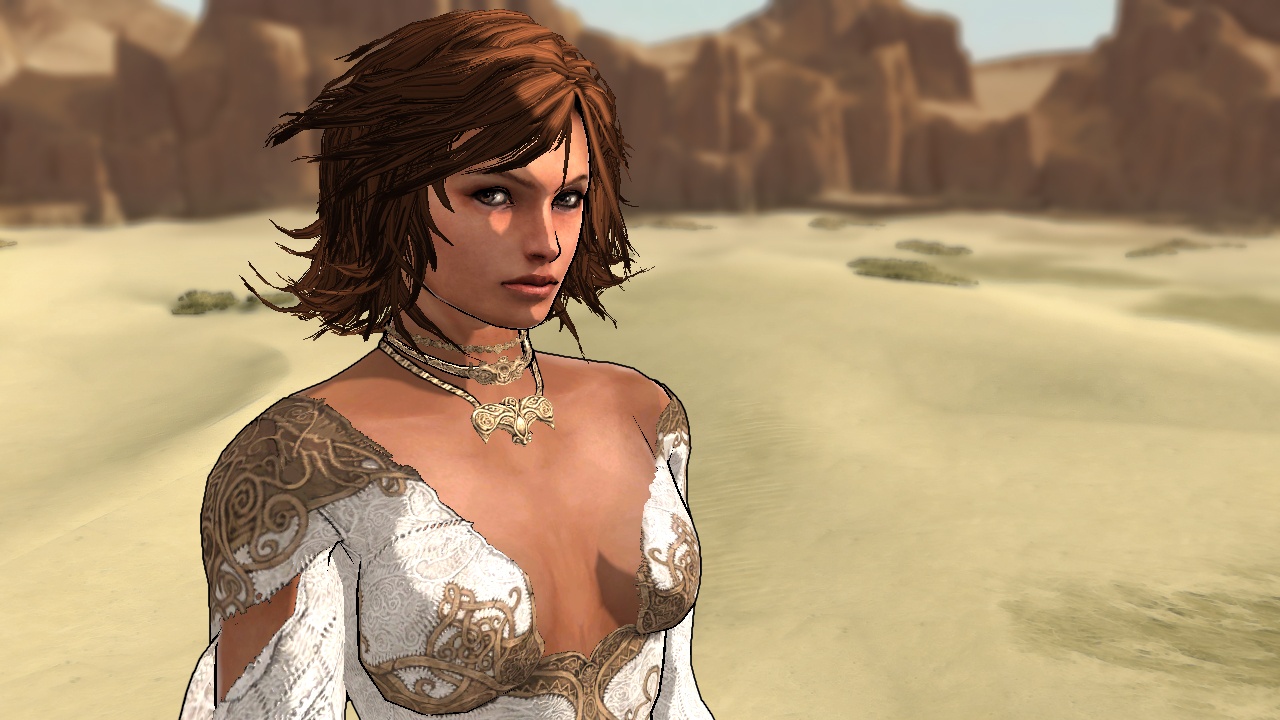
The game is called “Prince of Persia.” But it’s not really about the Prince. (He doesn’t even seem to be a prince this time. We call him “the Prince” because he has no name.) Really, the game is about (legitimate princess) Elika.
As the game opens, the Prince is lost in a sandstorm, calling out for Farah. Franchise veterans will recognize the name as that of the love interest from the Sands of Time trilogy - but it is soon revealed that Farah is actually the name of this Prince’s donkey, laden with the riches the Prince has recently looted.
It’s a nod to the previous games, but it’s also a dig at Princess Farah’s characterization and gameplay role. She was little more than a pack animal. The Prince, lost in the storm, is trying to reconnect with her, trying to return to that simplicity. Instead, he finds Elika.
I could feel it coming on yesterday, and it sent me early to bed, but today it is full-blown. I’m not gonna lie - I’ve always kind of liked being just a little bit sick. Sick enough to guiltlessly stay in bed playing video games all day (punctuated by naps and plenty of fluids) but not so sick that I can’t enjoy it.
I could play Prototype - the game I’m lately live-tweeting. But when I’m sick, I want a game that takes me to a happy place. Prototype may be a hell of a lot of fun, but it is sure not happy. Alex Mercer’s New York is a hellhole and his life is horrible. I may have a great time behind the controller, but he’s having a terrible one on the screen.
The whole point of escapism is that you escape to a better situation, not a worse one. Prototype is great for blowing off steam, but if I want to bury myself in another existence for a while, to forget about this one and the runny noses that come along with it, I play a game like Star Ocean.
I don’t usually post anything in the middle of the week. This isn’t a normal, full essay. But I had to get it out there. I had to save people who might otherwise have bought this game.
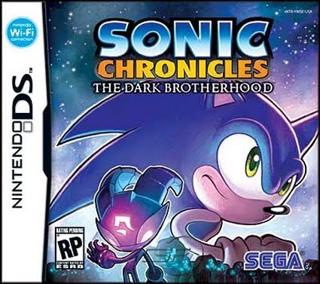
Sonic Chronicles: The Dark Brotherhood is a terrible, terrible game. Did you notice I didn’t link the title to the Amazon page? That’s because I don’t want you to buy it. I don’t even want to risk the possibility of you accidentally buying it. I can only imagine the wrath I would have right now if I had paid any money for it myself. As it is, I ripped it right out of my DS, stuffed it back into the GameFly envelope, and shoved it into the mail slot with as much contempt as I could muster.