I’ve been thinking a lot lately about franchises. Having recently played Mass Effect 2, and then Assassin’s Creed II, and now Uncharted 2, I have a lot of questions about what sequels are and what they should be.
When I played the original Mass Effect, I fell head-over-heels in love. I made three complete play-throughs in rapid succession, I devoured both novels available at the time (Revelation and Ascension), and when called upon to name my favorite three video games, Mass Effect made the cut.
Then I played Mass Effect 2, and now I barely care about the series. I mean, I’ll probably play Mass Effect 3. I guess. Certainly not for full launch-day price. You can bet I won’t pre-order, even if they don’t pull any of my pet peeve shenanigans.
What happened here that turned my devoted fandom to near indifference?
Read more...
The way things are right now, I still don’t have time to write the in-depth, fleshed-out articles I used to write. But I still have a lot of thoughts about video games, and most of them don’t really fit into 140 characters. So from time to time, I’m going to revisit this space with what’s on my mind.
Today I am thinking about superhero games. These, like film tie-ins, are so rarely done well that it’s actually noteworthy when they don’t suck.
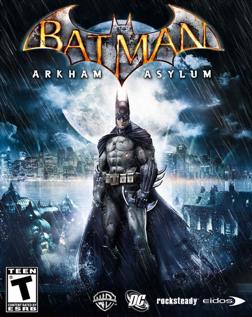
Part of the problem might be that superhero games tend to confine themselves to the “third-person action game” format. Sometimes that works - GTA-like mechanics fit Spider-Man surprisingly well, and taking several pages from the book of Bioshock (switched, of course, to third-person) paid off well for Batman.
Still, this scheme puts severe limits on the types of gameplay available, and not every superhero fits well into those limits. If we branch out into other genres, however, things really open up, and there are plenty of superheroes just waiting to star in a good game. Here’s the ones I have in mind, and the games from which they should take their cues.
Read more...
Let’s make a graph. The horizontal axis is player skill. On the far left is no skill - just random button-pushing. On the far right is perfect video game godhood, always doing exactly the correct thing at the correct time in the correct way. The first time you play a game, you’ll probably be somewhere in the middle - farther right if you’re a veteran gamer, farther left if you’re a novice. As you play the game, and learn its mechanics, you’ll trend right as you get better.
The vertical axis is performance level. At the very bottom is complete failure - game over as quickly as possible, not achieving any of the game’s goals. Farther up is the passing line, separating failure below from success above. The line itself is a performance level of just barely passing a challenge - surviving the boss fight with one hit point left, clearing the race course just before the clock runs out, and so on. And at the very top of the axis is absolute perfect performance - winning by the largest margin possible.
Now we can chart the performance levels achievable with a particular amount of player skill: the “skill curve” for a given challenge.
Read more...