I wrote recently about dividing gamers into “completionists” who want to master a game and not miss anything and “wanderers” who want to explore a game and find surprises. Game designs can be good for one group and bad for the other, or can try to find compromises.
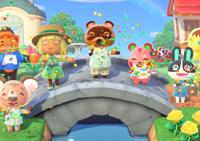
Animal Crossing is very much designed to appeal to wanderers, to the point where it almost comes across as purposefully trolling the completionists.
Animal Crossing wants you to slow down and relax. It isn’t designed to be binged - it doles out mechanics slowly, limits what you can do in a day, and adds in overnight delays to encourage you to come back tomorrow. The game actively resists players who want to power through its content, offering its best experiences to those who just check in for a while once or twice a day.
And that’s fine, even if it’s not how I normally play games since I like to progress on my own schedule, not someone else’s. I have to remember to get in the right headspace for the game, but then I can have a good time. The problem is that Animal Crossing also has several mechanics that make it very hard to stay in that headspace.
If you’re a wanderer who naturally approaches games in a relaxed, open-ended way - then you’re fine. But if you’re a goal-oriented completionist then Animal Crossing is actually a bit of a minefield, primarily through having checklists of goals with time-limited availability. Such as the stringfish.
See, there’s quite a variety of fish you can find in Animal Crossing. They vary by time of year, by time of day, by body of water, and sometimes by weather. On top of that, they have varying levels of rarity. The stringfish, for example, can only be found from December to March, from 4 pm to 9 am, in elevated rivers, and even then it’s quite rare. You can do everything right - stock up on fish bait (which is tedious, as you must hunt manila clams and then craft them into bait one at a time), head to a clifftop river at the right time of day during the right month, catch dozens or even hundreds of fish, managing your limited inventory and breaking fishing poles along the way, and never get a stringfish.
It might seem clear that this is the wrong way to play. It means a lot of time spent doing things that are tedious and stressful instead of relaxing. Clearly it would be better to just do some fishing here and there when you’re in the mood, and if/when you finally do catch the stringfish it’s a pleasant surprise.
Except. EXCEPT. There’s a museum. The museum lets you donate one of every fish, bug, and fossil you can find, displays them in somewhat spectacular fashion, and rewards you for completing a collection. The museum turns fish into a checklist and stringfish is absolutely on that list. And Animal Crossing released on March 20, less than two weeks before stringfish became unavailable for nine months. Is it any wonder that some players felt pushed to try hard to get the stringfish before the month ended - and then felt aggravated when they put in a lot of time and effort and still didn’t get the damn fish?
This is my problem with Animal Crossing. It provides experiences that are best enjoyed in a wanderer-style way, and then includes mechanics that encourage completionists to approach the game in a very different way that’s much less enjoyable. It’s sort of the completionist’s fault that they are playing the game wrong, and it will especially seem this way to wanderers who fall naturally into the better ways to play. But the game could do a lot more to lead more kinds of players into its best experiences.
Here’s another example that’s new to New Horizons: tool durability. When building most tools (shovel, fishing pole, bug net, etc.) you first have to build a “flimsy” version from common materials. This version is only good for a small number of uses before it breaks. You can also build a normal version of the tool, which takes the flimsy version and a slightly rarer material. This version lasts many more uses.
Here’s the thing, though - going from the flimsy to the normal version doesn’t add uses. It sets them to a higher number. That means that the most efficient use of your materials is to use the flimsy version almost enough to break it and then upgrade it to the normal version.
That’s already a kind of obnoxious thing to do, but on top of that tools don’t have a visible durability meter. So if you do want to optimize this, you have to learn how many uses a tool has and then keep count per tool. Undercount and use it too many times before upgrading and it’ll break instead; overcount and upgrade early and you’re missing on potential uses - either way, you waste crafting time and materials.
Now, I think it’s fair to argue that you aren’t supposed to try to optimize this way. Many players will just craft the flimsy version and the upgrade in one go and not worry about the “wasted” uses and probably have a better experience. But here’s the thing - the game could have easily catered to both types of players. If the upgrade added uses instead of resetting them, it would always be correct to just go straight for the upgrade and all the players would have the better experience.
By not approaching its design in this way - by not setting things up so that the mechanically optimal way to play is also the most enjoyable way to play - Animal Crossing is actively setting traps for players who want to optimize. The game is designed to be maximally enjoyable if you approach it as a relaxed experience but has mechanics that cause certain kinds of players to not be relaxed.